
Most venue marketing is built for couples who live within an hour’s drive. They can swing by on a Saturday, walk the property and book. A destination wedding venue doesn’t get that luxury. The couple you want might be three states away, and they may not set foot on your property until the week of the wedding.
That changes how you have to market. Destination wedding venue marketing isn’t regular venue marketing with a bigger ad radius. You’re asking someone to trust you with the biggest party of their life, plus their guests’ travel plans, from a distance. Here’s how I’d approach it.
Sell the trip, not just the venue
A local couple is comparing you to other venues. A destination couple is comparing you to other places. Before they pick a venue, they’re picking a town, a coastline, a mountain or a wine region. So your marketing has to answer a bigger question first: why get married here?
I wrote about this in my post on wedding venue sales tips. You aren’t selling a room, you’re selling a weekend. For a destination venue that’s doubly true. Guests are flying in, and they’re going to be around for two or three days whether you plan for it or not. Show couples what that whole weekend looks like at your place: the welcome dinner, the ceremony, the send-off brunch and the things guests can do in between.
If you have lodging on-site or partner hotels nearby, put that front and center. If you don’t, build those relationships so you can tell couples where their guests will stay and how they’ll get from the airport.
Answer the out-of-town questions before they ask
Destination couples have more questions than local couples, and most of them aren’t about your venue at all. How far is the nearest airport? Where do guests stay? What’s the weather like in October? Who do you recommend for catering, florals, and hair and makeup? What’s the plan if it rains?
If a couple has to email you to find this out, a lot of them won’t bother. They’ll move on to the venue that made it easy. Build one page on your website for couples planning from out of town and put all of it there: travel, lodging, a preferred vendor list, a sample weekend timeline and starting pricing if you’re comfortable sharing it. It also matches what people type into Google when they’re researching a destination wedding in your area.
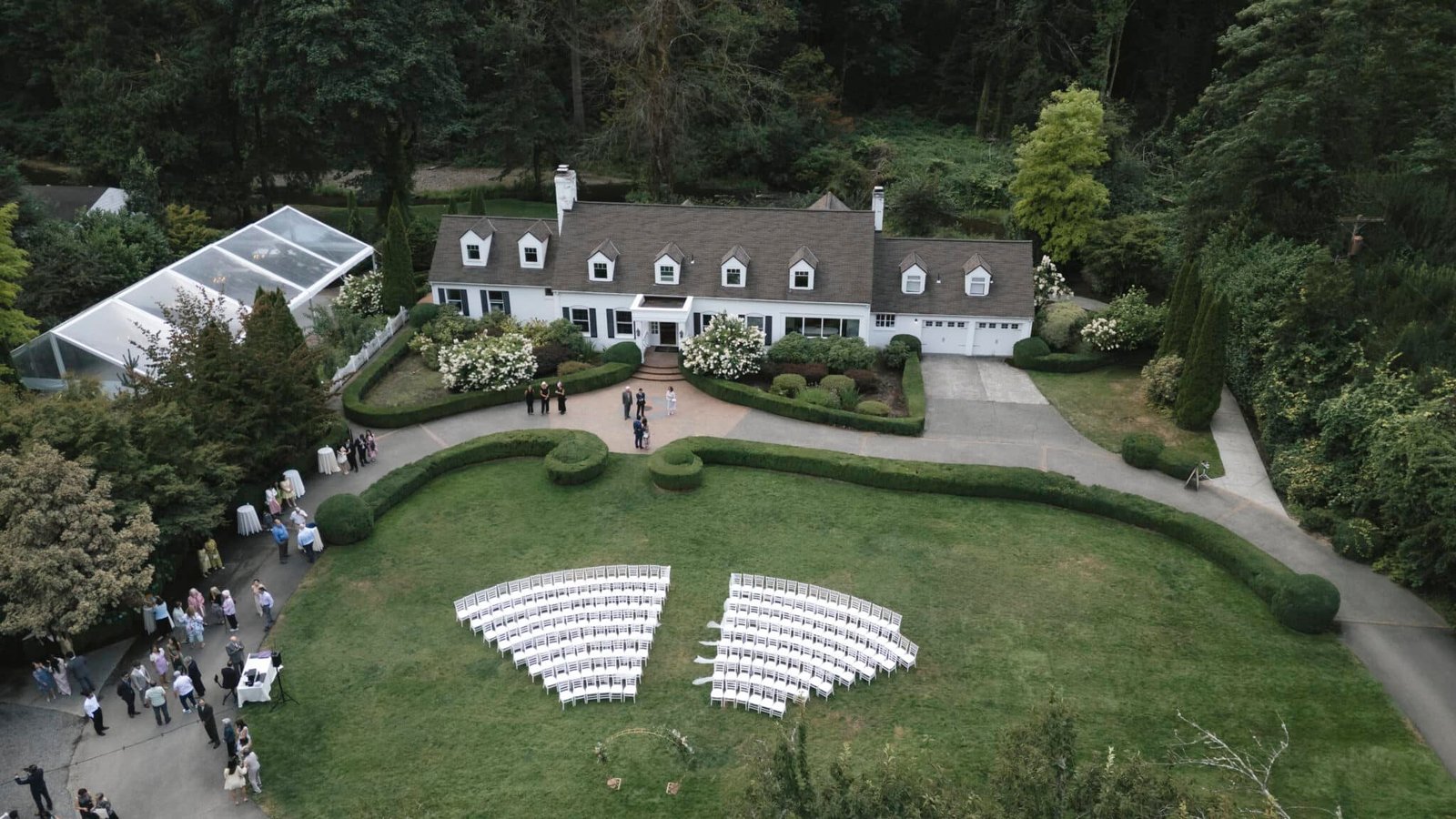
Replace the in-person tour
For a local venue, the tour is where a lot of bookings happen. Destination couples often can’t tour early on, so you need a version that works through a screen.
That means real video: a walkthrough of each space, ideally with someone from your team talking through how a day flows, from getting ready to the last dance. The content that has driven the most bookings for us is still the venue team talking about the space, not a slideshow of empty rooms.
Then offer a live virtual tour as the next step: a short video call where your coordinator walks the property on a phone and answers questions as they go. Put “Can’t visit in person? Book a virtual tour” anywhere you ask for an inquiry.
Run ads where your couples live, not where your venue is
A common mistake with paid ads for destination venues is targeting a radius around the venue, which is exactly where most of your couples aren’t.
Start by looking at where your past couples actually came from. Your inquiry forms and CRM should tell you. Those cities are your feeder markets, and that’s where your budget should go.
With Google Ads for wedding venues, that means showing up when people in those markets search for weddings in your area, using phrases like “destination wedding venues in [your region]” or “[your town] wedding venue.” With Meta ads, it means putting video of real weekends at your venue in front of people in those cities who are planning a wedding, often before they’ve decided on a location. Meta is where you plant the idea of getting married at your place. Google is where you catch them once they’re searching.
Either way, send that traffic to your out-of-town planning page, not your homepage. I’ll go deeper on running national campaigns for destination venues in another post.
Make the whole booking process work remotely
Once a destination couple is interested, every step has to work from their couch: the proposal, the contract, the deposit and the payment plan. If the process stalls because someone has to print, sign and scan a PDF, you’ve given them a reason to keep shopping.
We use HoneyBook for a lot of this at Tulen. Proposals, contracts and invoices go out together, and couples can review, sign and pay in one place. If you want to see how we set it up, here’s our page on HoneyBook for wedding venues.
Speed matters even more here, because a couple planning from far away is usually talking to several venues at once. Reply fast, make the first message personal, and keep the next step small, like a quick call or a virtual tour.
Turn every wedding into the next inquiry
Being a destination venue comes with a trade-off. When we sat down with Sean Colwell of Fire House Loft in New Orleans and the HoneyBook team, he explained why he deliberately went the other way and built a locals-focused venue:
“I wanted to be more of a local place than a destination wedding type of place where you’re just getting that one customer and you never see him again. I want that lifetime value.”
Most destination couples get married with you once. But each wedding brings a full guest list from all over the country onto your property, and some of those guests are engaged or planning their own event. That’s how a destination venue builds momentum.
So capture it. Ask every couple for a review and permission to share their photos, feature real weddings on your site and social, and stay in touch with the planners who bring you couples. When your next couple can’t visit in person, your past weddings are the proof.
Where this leaves you
Destination wedding venue marketing comes down to removing distance. Show couples the whole weekend, answer the travel questions up front, give them a tour they can take from home, run ads in the cities your couples actually come from, and make booking work entirely online.
That’s the work we do at Tulen. We help venues stay booked out with content, Google and Meta campaigns, follow-up and booking tracking built around the experience you actually sell. If you run a destination wedding venue and want more out-of-town couples finding you and booking, book a strategy call below.